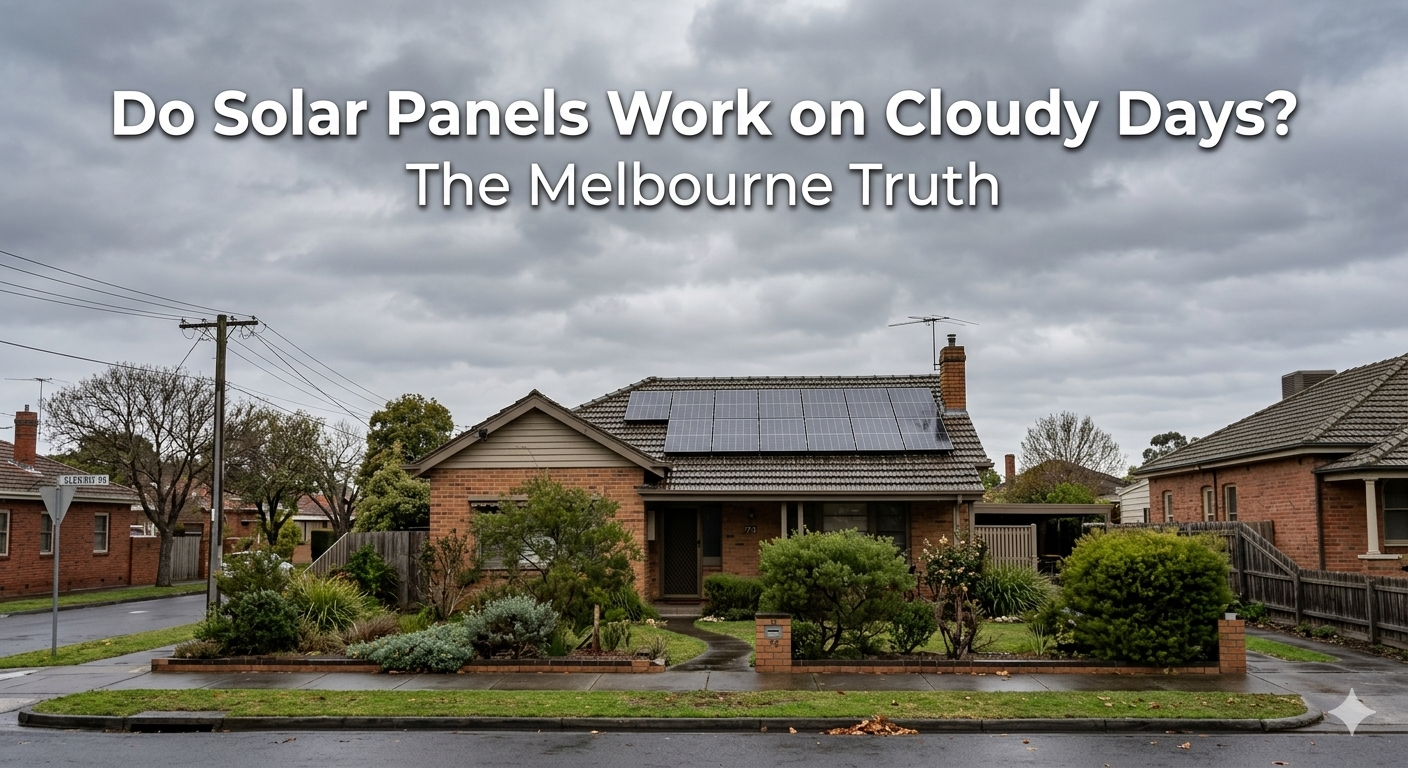
Melbourne homeowners often ask whether solar panels work on cloudy days. We have good news. Our city has a reputation for unpredictable weather, but solar panels continue to generate electricity even when clouds roll in. Melbourne averages about 4.18 peak sun hours per day. Solar systems can still produce 30% to 70% of their usual output on overcast days.
We’ll address the common question of whether solar panels work in winter and explain how they function on cloudy days through diffused light capture. You’ll find out whether solar panels still work on cloudy days and understand performance during rainy conditions. You’ll also learn the truth about solar panel performance on cloudy and rainy days in Melbourne’s climate.
This is where choosing the right system and installer becomes crucial. Companies like Alltrics Energy specialise in designing solar solutions that perform efficiently even in Melbourne’s changing weather conditions. From high-quality panels to smart system design, their approach ensures consistent energy generation and better long-term returns for homeowners.
In this guide, we’ll answer the common question of whether solar panels work in winter and explain how they generate power on cloudy days using diffused sunlight. You’ll also learn how solar performs during rainy conditions and get a clear understanding of what to expect from your system in Melbourne’s climate.
How Do Solar Panels Work on Cloudy Days?
Solar Panels Capture Diffused Light
Solar panels convert light into electricity through photovoltaic cells. These cells respond to photons whatever their arrival pattern direct sunbeams or scattered light. Sunlight doesn’t disappear when clouds cover the sky. It becomes diffused and spreads across the atmosphere instead of beaming straight down. Our panels absorb this scattered light from multiple angles and trigger the same photovoltaic effect that occurs on sunny days.
Modern solar cells are sensitive to a broad spectrum of light wavelengths, not just intense direct rays. This explains why panels continue generating power during dawn, dusk and overcast conditions. The semiconductor materials inside each cell capture diffuse photons just as they capture direct ones, though with reduced efficiency.
What Happens to Energy Output During Cloud Cover
Output during cloudy weather varies based on cloud density and type. Thin, high-altitude clouds affect production barely, while thick storm clouds can reduce output by 70% to 90%. Most cloudy conditions fall somewhere in between. Solar panels usually work at 10% to 25% capacity during heavy overcast conditions, but this range expands to 10% to 80% depending on specific atmospheric conditions.
A Solar Analytics study monitoring systems across Adelaide, Melbourne and Sydney found that Adelaide’s cloudiest days still produced 57% of the output compared to sunniest days. Sydney’s cloudiest quarter generated around 37%. The same study revealed that overcast conditions cause a 50% reduction in output, whereas low-level dark clouds drop production by 70% to 90%.
Certain cloud formations can enhance panel efficiency through the edge-of-cloud effect. Sunlight reflects off cloud boundaries and concentrates additional solar radiation onto panels. This sometimes creates output spikes higher than clear-day production.
Melbourne’s Cloud Cover Reality
Melbourne experiences an average of 179.4 cloudy days per year. May ranks as our cloudiest month, while February sees the least cloud cover. Southern Australia, including Melbourne, receives more cloud coverage because of higher moisture content in coastal air. Frontal systems bring increased rainfall and cloud cover to our region from May to September, the northern dry season.
This cloud pattern doesn’t diminish solar viability. Germany is a leader in solar energy production despite cloudy conditions. This proves that systems perform well even with frequent overcast weather.
Do Solar Panels Still Work on Cloudy and Rainy Days?
Performance During Overcast Conditions
Solar systems maintain production during overcast weather, though at varying rates. Panels generate 30% to 50% of their optimal output on cloudy days, while the traditional estimate of 10% to 25% applies to heavy overcast conditions. Output drops to around 10% to 25% of normal production during light rain with moderate cloud cover, but heavy rain combined with dark clouds can reduce generation to as low as 10% to 20%.
How Rain Affects Solar Panel Output
Rain brings both challenges and benefits to solar generation. Thick cloud cover reduces output for a time, but rain cleans dirt, dust and debris from panel surfaces. This washing restores optimal performance once sunlight returns. Panels continue capturing diffused sunlight during rainfall, and electricity production doesn’t stop. Accumulated dust can decrease efficiency by 15% to 25%, and sometimes up to 50% in extreme cases. Rain’s cleaning effect proves valuable for long-term performance.
Winter Weather and Solar Generation
Winter produces the lowest seasonal output in Australia, with production 41% to 73% less than summer. Shorter daylight hours and lower sun angles mean panels generate reduced energy during winter months. A Yarraville household with a 4.5 kW system produces around 23 kWh daily in summer but averages 9 kWh in winter, with sunny winter days reaching up to 18 kWh. Solar panel performance can drop by 2% to 15% during winter, depending on location, panel tilt and surface cleanliness.
Temperature Effects on Panel Efficiency
Cold weather benefits panel efficiency. Solar cells operate more efficiently at lower temperatures and produce higher voltage at the time they are cooler. Most panels function between minus 30°C and 80°C, meaning mild Australian winters pose no operational issues. Extreme heat reduces effectiveness more than cold, as silicon crystalline modules suffer a temperature coefficient between -0.30% to -0.45% per degree rise above 77°F.
Common Myths About Solar Panels in Cloudy Weather
Misconceptions about solar performance in less-than-ideal conditions prevent many homeowners from installing systems that would serve them well.
Myth: Solar Panels Don’t Work Without Direct Sunlight
Reality: Panels still generate substantial electricity from diffused light even under thick cloud cover. One study shows solar panels remain 76% effective even when light cloud cover obscures the sun. Photovoltaic cells capture photons from scattered light just as they convert direct beams and maintain production throughout overcast periods.
Myth: Melbourne’s Weather Makes Solar Ineffective
Reality: Regions like Melbourne see enough daylight and diffused solar radiation to make systems financially viable year-round. Germany provides compelling evidence against this myth. Germany became a world leader in solar energy generation despite ranking low on the sunny scale. Solar accounted for an estimated 9% of the country’s net electricity generation in 2019. Melbourne definitely can if predominantly cloudy Germany succeeds with solar.
Myth: You Need to Live in Queensland for Solar to Work
Reality: Solar only making sense in tropical or desert climates represents outdated thinking. Melbourne’s solar uptake grows faster because systems make economic and environmental sense here. Modern panels capture diffused light efficiently and perform well in a variety of Australian climates whatever the latitude.
Myth: Solar Output Drops to Zero on Rainy Days
Reality: Solar panels continue producing electricity whenever daylight exists, though rainy weather reduces output. A 250-watt panel in rainy conditions still outputs around 10 to 20 watts. A 5kW system continues production at 200 to 400 watts even in unsuitable conditions. Rain brings the added benefit of washing away dust and debris and keeps panels clean to perform optimally once skies clear.
Maximizing Solar Performance in Melbourne’s Variable Weather
Proper orientation is where system optimization starts. North-facing panels capture maximum sunlight throughout the day in Australia. Panels facing northwest or northeast still achieve 95% of optimal production, while east or west orientations reach approximately 85%. The ideal tilt angle equals your latitude. Melbourne roofs pitched between 10 to 15 degrees either side of this angle lose only 1% to 1.5% of maximum output.
System Design and Panel Orientation
Panel placement matters substantially when clouds reduce light intensity. Shading from trees or buildings can cut output by 50% or more, even with just 25% panel coverage. Microinverters and power optimizers minimize these losses and allow each panel to operate independently.
Quality Components That Handle Low Light
Monocrystalline panels outperform alternatives in cloudy conditions. They capture 15% to 20% more energy from diffuse light. These panels achieve 20% to 24% efficiency and generate more power when light levels drop. Half-cut cell technology further reduces power losses during partial shading.
Battery Storage for Cloudy Day Coverage
Battery systems store excess energy from sunny periods to use during overcast days. Solar panels still generate 10% to 25% of normal output on cloudy days. Batteries charge at this reduced rate. Smart systems can also charge from off-peak grid electricity when solar input drops.
Annual Energy Production vs Daily Output
Melbourne systems average 3.6 kWh per kilowatt installed daily across the year. Summer production runs 30% to 40% above this average, while winter drops 30% to 40% below. Therefore, focus on annual yields rather than daily fluctuations when evaluating system performance.
Get a Free Solar Quote by Alltrics Energy Solar Installers in Melbourne & Start Saving Today to design a system optimized for Melbourne’s conditions.
Conclusion
Melbourne’s cloudy weather shouldn’t stop you from going solar. Panels generate electricity year-round through diffused light and produce 30% to 70% of normal output on overcast days. Modern systems perform well despite variable conditions, and the annual production justifies the investment. Quality components and proper orientation maximize returns in our climate. Get a Free Solar Quote & Start Saving Today to design a system that works for Melbourne’s unique weather patterns.
FAQs
Q1. Do solar panels generate electricity on cloudy days?
Yes, solar panels continue to produce electricity on cloudy days by capturing diffused sunlight. While output is reduced compared to sunny conditions, panels typically generate between 30% to 70% of their normal capacity during overcast weather, depending on cloud thickness and density.
Q2. How much power do solar panels produce during rainy weather?
During light rain with moderate cloud cover, solar panels produce approximately 10% to 25% of their normal output. Heavy rain combined with dark clouds can reduce generation to as low as 10% to 20%. However, rain provides the benefit of naturally cleaning panels, which helps restore optimal performance once conditions improve.
Q3. Are solar panels less efficient in winter?
Solar panels actually operate more efficiently in cooler temperatures, though they produce less total energy in winter due to shorter daylight hours and lower sun angles. Winter production is typically 41% to 73% less than summer output, but the panels themselves perform better in cold weather than in extreme heat.
Q4. Is it true that solar panels don’t work without direct sunlight?
This is a myth. Solar panels work effectively with diffused light and remain approximately 76% effective even under light cloud cover. Photovoltaic cells capture photons from scattered light just as they convert direct sunlight, which is why solar energy succeeds even in predominantly cloudy regions.
Q5. What happens to solar panel output when clouds pass over?
Output varies based on cloud type and density. Thin, high-altitude clouds barely affect production, while thick storm clouds can reduce output by 70% to 90%. Interestingly, certain cloud formations can temporarily enhance efficiency through the edge-of-cloud effect, where sunlight reflects off cloud boundaries and concentrates additional radiation onto panels.